

Station
Case Study of Introducing a Personalized AI Librarian Station for Library Guidance
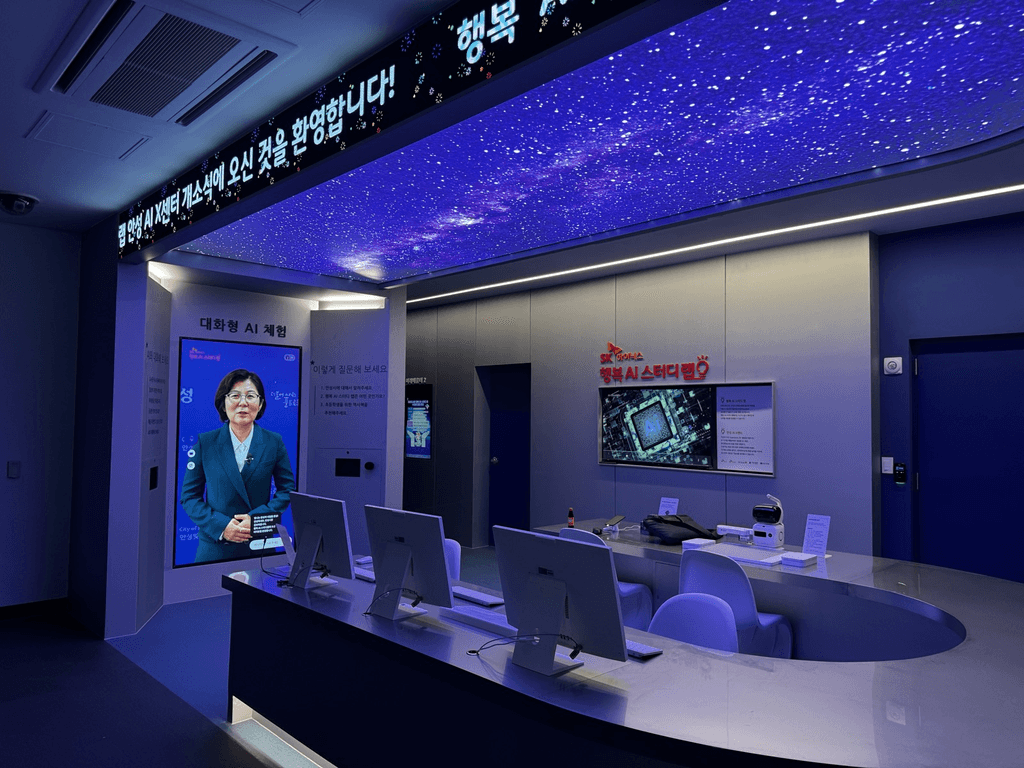
About
Public facilities such as libraries and youth centers offer a wealth of information, yet they have historically functioned under passive structures where users must manually search or inquire for what they need. Specialized services—such as book recommendations, facility navigation, and youth counseling—require tailored responses that traditional, one-way information delivery cannot adequately provide.
To bridge this gap, we introduced a specialized guidance and counseling station powered by Perso Interactive AI. This allows visitors to engage in real-time dialogue with an AI Human for personalized assistance. As a result, both the number of visitors and user satisfaction increased, while the automation of repetitive inquiries improved overall operational efficiency.
Background
Users of public facilities increasingly expect faster and more personalized access to information. However, traditional systems in libraries and educational facilities rely heavily on manual searches or staff assistance, making it difficult to deliver immediate, tailored guidance based on individual age, interests, and context.
In areas such as book recommendations, youth career counseling, and facility navigation—where user needs vary significantly—staff workload increases, while users experience longer wait times and higher information fatigue. To improve accessibility and user experience, an Interactive, conversational AI Kiosk solution was introduced.
Solution
By leveraging Perso Interactive AI, we built a customized guidance and counseling station where an AI Avatar understands the context of natural voice or text queries. Whether a user asks, "Recommend a good book for a teenager," "I want to talk about my future career," or "Recommend a book for a woman in her 50s to help with insomnia," the AI provides hyper-personalized results by synthesizing age, situation, and specific interests.
In libraries, the system integrates book location tracking, while in youth centers, it seamlessly links users to counseling programs, allowing them to resolve all their needs at a single AI Station touchpoint. Furthermore, by automatically handling repetitive questions, the system reduces the administrative burden on staff while ensuring that Multilingual support is available for diverse community members.
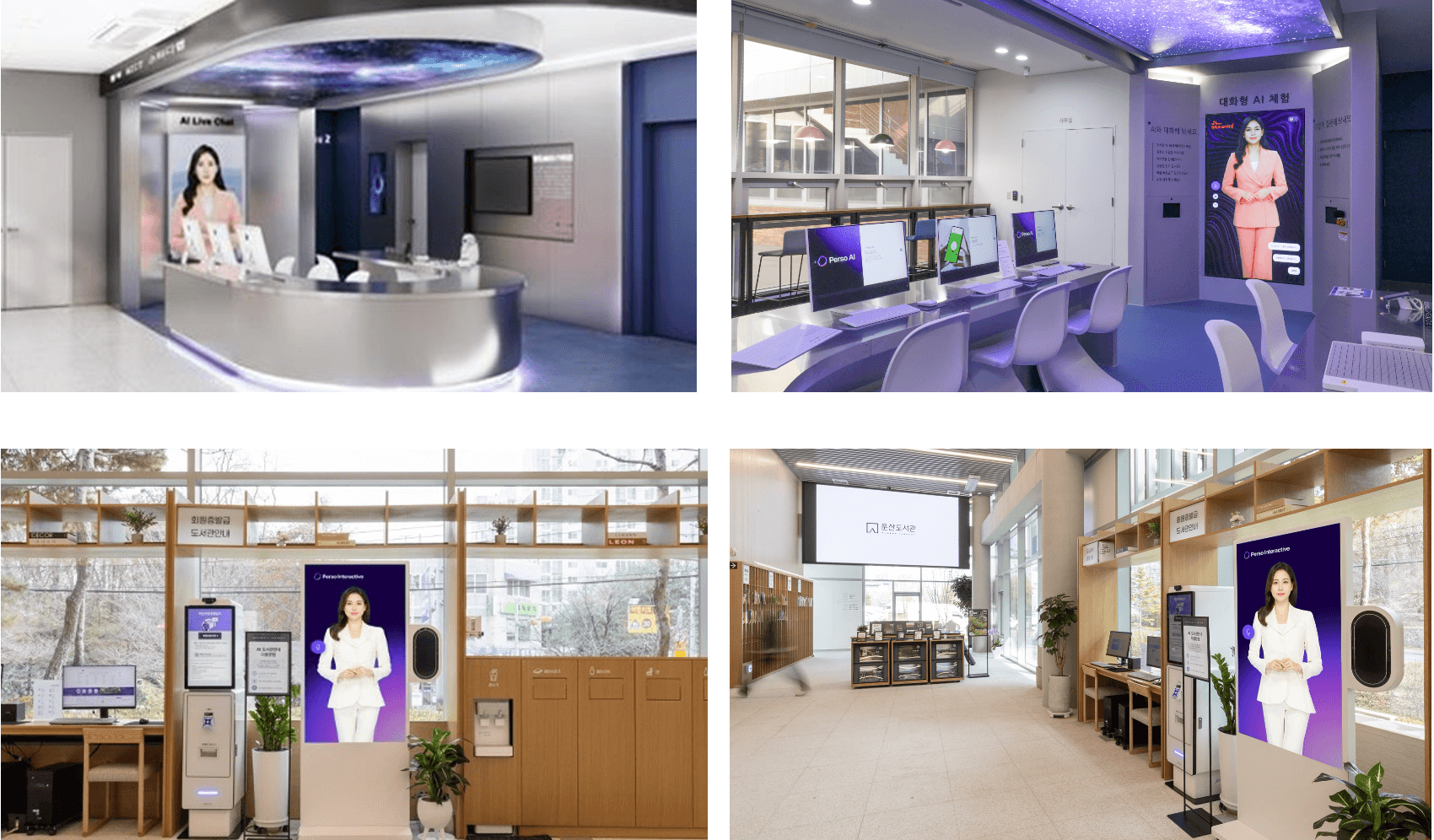
Results
Following implementation, there was a noticeable increase in visitor numbers, as the personalized, conversation-based experience became a new motivation for facility visits.
The process of manually searching for information or asking staff was simplified, reducing the time required to access information and enabling users to find what they need more quickly and conveniently. Usage rates for book recommendations and counseling programs also increased, demonstrating that personalized guidance directly contributes to meaningful facility engagement.
At the same time, the automation of repetitive inquiries reduced staff workload, allowing personnel to focus on more specialized services—further improving operational efficiency.
Recommended For
This use case is ideal for:
Public facility operators such as libraries and youth centers
Educational institutions seeking to introduce personalized information services
Local governments requiring Multilingual AI Kiosk solutions
The solution is also highly scalable for cultural centers, community centers, welfare facilities, and beyond.
Related Article: ESTsoft Usheres in the Era of Physical AI… 'AI Humans' Spread Everywhere in Daily Life.
Frequently Asked Questions
Q. Can it be deployed directly to the field without installation or separate development?
A. Yes. Perso Interactive AI can be deployed immediately in the field without any separate development or infrastructure setup. However, if additional information or customization is required, we will proceed with the desired development through prior consultation. Once developed, you can deploy station (kiosk) devices and begin operation immediately on-site.
Q. What criteria are used for book recommendations?
A. Personalized recommendations are provided based on the user's inquiry content, selection history, and keywords of interest.
Q. Is it possible to integrate with library systems?
A. Yes, it is possible. It can be integrated with library databases (book information, loan status, location data, etc.) to provide real-time information.
"
Since implementation, more users are independently exploring information and connecting to programs. Compared to manual searches, the system quickly understands user needs, leading to consistently positive feedback in terms of satisfaction.
Public Facility Operations Manager


