

Station / Touch / Mobile
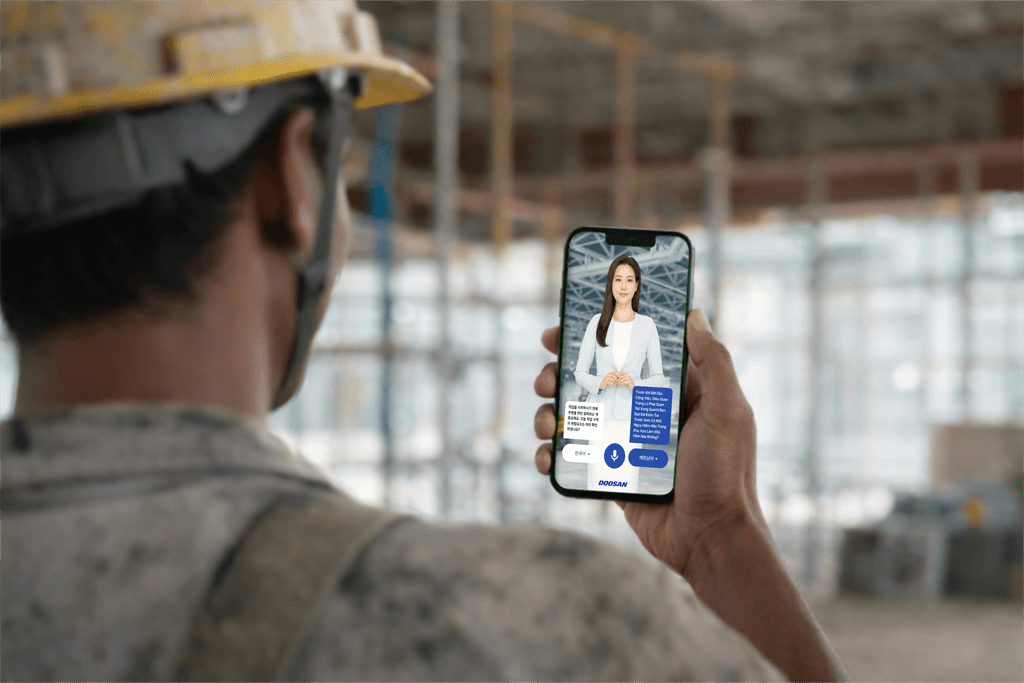
AI safety training available anywhere on construction sites via tablet and mobile
About
Construction sites are classified as high-risk industrial environments, where a significant portion of accidents stem from a lack of hazard awareness and non-compliance with safety protocols. Particularly in sites with a high ratio of foreign workers, language barriers often hinder the effective communication of safety training and pre-work verification. Traditional risk assessments have also faced limitations, frequently becoming mere formalities.
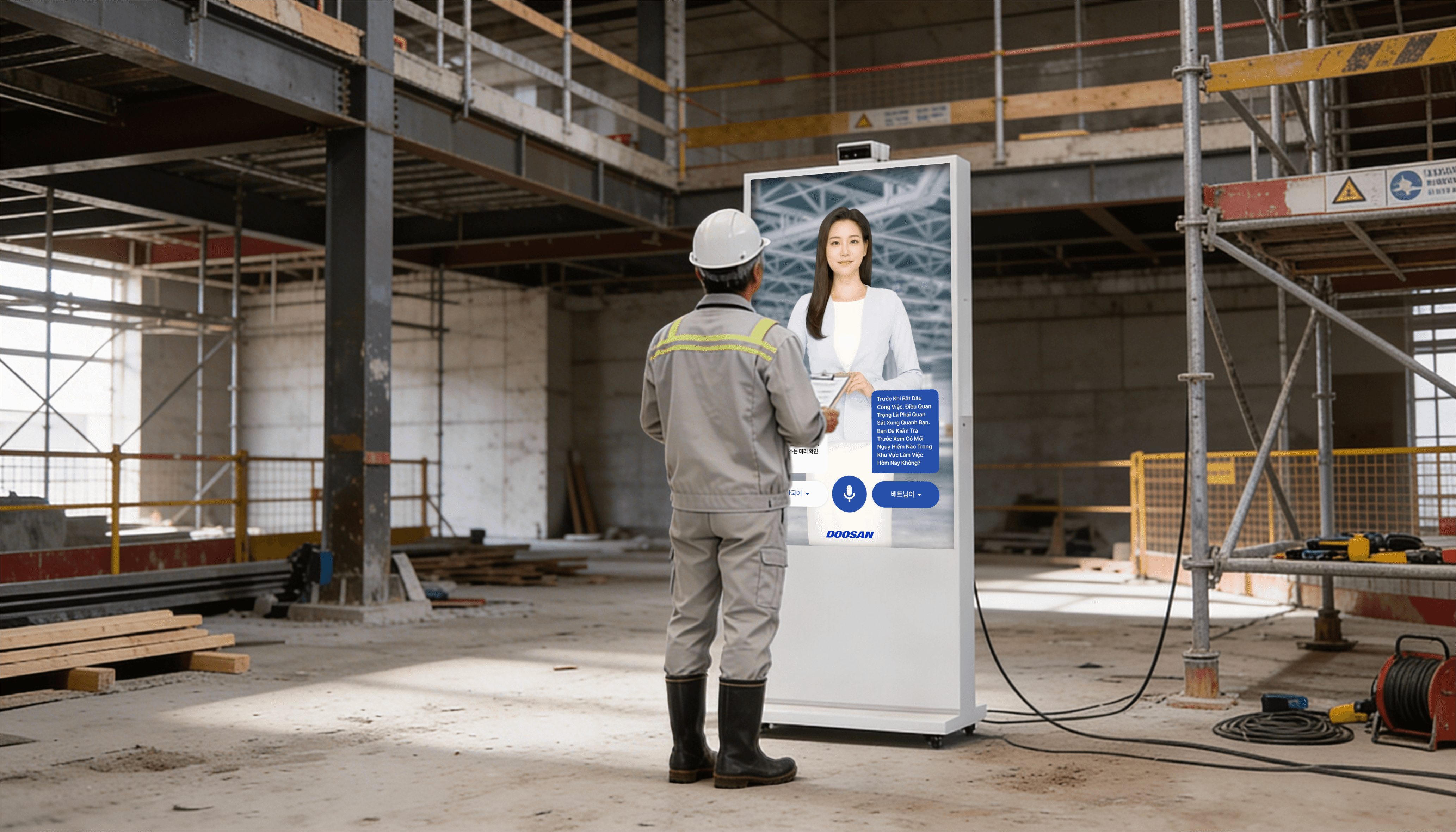
To solve these critical challenges, Doosan Enerbility, a leader in the global energy and construction sector, implemented the Perso Interactive AI solution. Before entering a site, workers engage in real-time dialogues with an AI Avatar to verify their understanding of specific tasks, potential hazards, and prevention measures. This proactive safety management system allows for a granular check of hazard awareness, significantly enhancing the efficacy of on-site safety controls.
Background
Previously, safety management at Doosan Enerbility’s construction sites often focused on compliance records or written verifications, making it difficult to confirm whether workers truly understood the specific risks of their tasks. For foreign workers, the delivery of safety protocols was inevitably hindered by language barriers, and site managers had to spend excessive time on repetitive explanations and verification tasks.
Additionally, because construction sites involve constantly changing task types and risk factors, simply repeating the same training was insufficient for real prevention. Consequently, there was a growing need for a more Interactive, proactive, and data-driven safety management system where workers could answer questions in their own language and demonstrate their actual understanding of risks and countermeasures before starting work.
Solution
Perso Interactive AI enables workers to engage in real-time conversations with an AI Avatar upon site entry, assessing their understanding of tasks, key risk factors, safety protocols, and preventive measures.
The AI analyzes workers’ responses and quantitatively evaluates their level of hazard awareness, establishing a more practical and reliable AI-driven risk assessment system.
For example, based on answers to questions such as “What task are you performing today?”, “What are the risks involved?”, and “What measures must you take for prevention?”, the risk assessment model calculates a score. If the score falls below a certain threshold, the system can trigger additional guidance or even restrict site entry.
Furthermore, the system features Natural Language Understanding (NLU) tailored to construction-specific terminology and provides Multilingual real-time interpretation, allowing for seamless safety procedures without language barriers. The solution can also be integrated with site navigation or work zone guidance to assist with on-site adaptation.
Results
Following implementation, the number of cases where workers entered the site without sufficient safety awareness was significantly reduced. The introduction of an AI Avatar–based pre-entry safety interview created a more effective safety filter compared to traditional methods.
With real-time Multilingual AI support, foreign workers were able to fully understand safety instructions and risk assessments in their own languages. This not only improved comprehension but also reduced communication gaps between workers and site managers.
As a result, the AI now assists with a portion of repetitive explanations and verifications, reducing the operational burden on site managers and allowing them to focus on high-risk personnel management and emergency response.
This has established the foundation for transitioning from formal, procedure-oriented management to a data-driven safety system that verifies actual understanding.
Recommended for
This use case is ideal for:
Construction site operators with a high proportion of foreign workers
Safety managers seeking to improve the effectiveness of training and risk assessment
Construction companies aiming to streamline repetitive safety verification processes
It is particularly effective for those who want to practically verify workers' understanding of risk factors before work begins and establish more systematic safety management standards.
Frequently Asked Questions
Q. How is the risk assessment conducted?
The AI avatar asks questions about the task, potential hazards, and safety precautions, and quantitatively evaluates the worker’s level of risk awareness based on their responses.
Q. Can foreign workers use it without any issues?
With real-time multilingual interpretation support, the system enables seamless guidance and verification processes without language barriers, while also incorporating on-site terminology to enhance understanding.
"
Communication with our foreign workforce has become incredibly seamless. Being able to see the workers' safety awareness levels as quantified data makes site management significantly more efficient and reliable.
Doosan Enerbility Site Manager


